
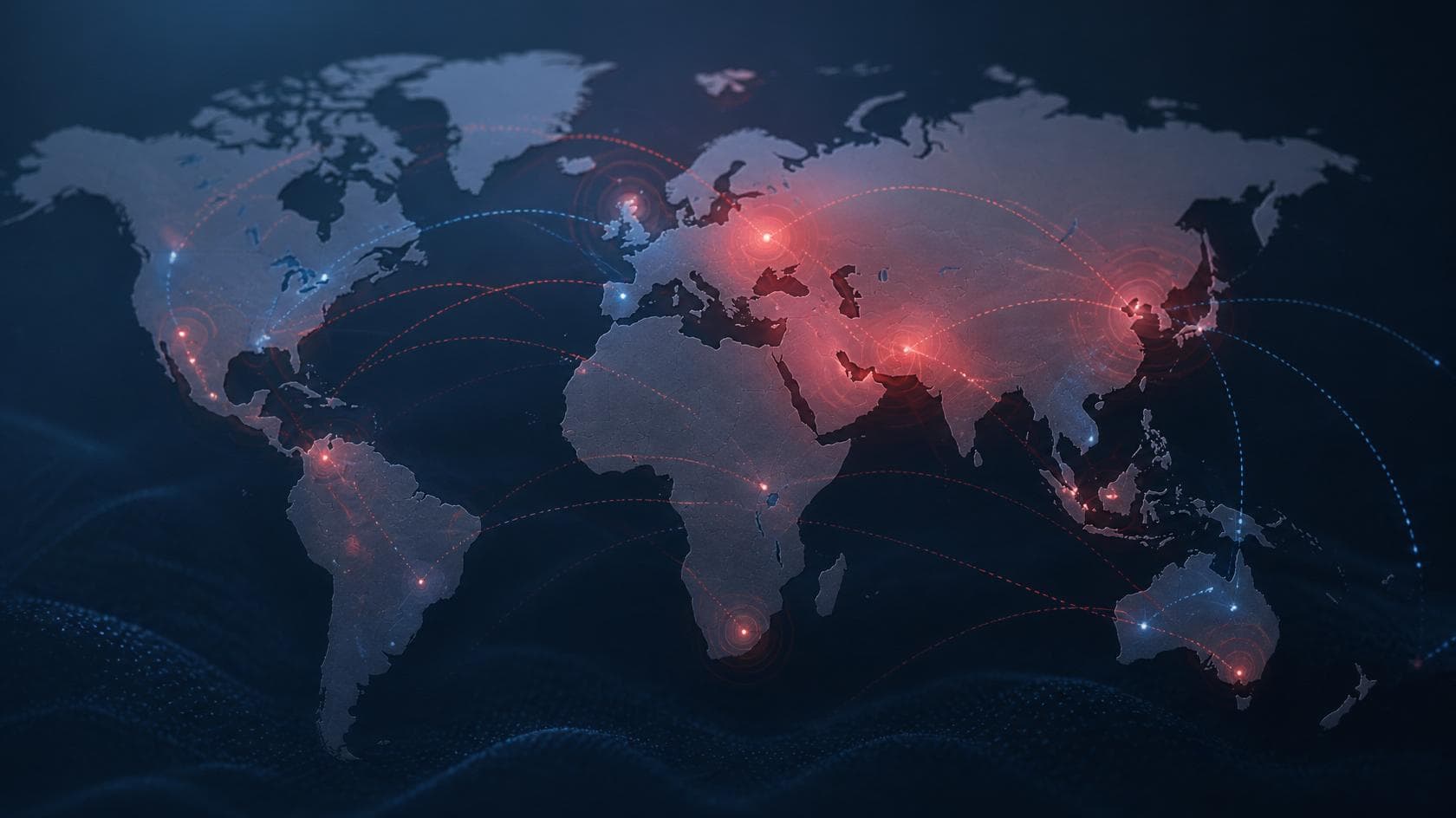
Many Indian mid-market businesses saw an increase in their cost of capital between 80 and 120 basis points between 2022 and 2024. It’s interesting to see that operational inefficiencies or poor financial performance did not contribute to the increase. Rather, it resulted from geopolitical spillovers that ranged from trade disruptions and protracted regional conflicts to energy instability and supply chain realignment.
The way investors evaluate risk has been drastically altered by this transformation. Sector dynamics, profitability, and revenue growth are no longer the only factors influencing valuation. Pricing multiples, discount rates, and investor confidence are all increasingly impacted by external geopolitical events. As a result, concepts such as geopolitical risk premium and country risk premium have become essential to contemporary valuation analysis.
For CFOs, startup promoters, and CXOs, the challenge is no longer whether geopolitical uncertainty matters. The real challenge lies in understanding how to quantify it and reflect it appropriately within Valuation Models. In order to help business executives make informed strategic decisions during protracted periods of uncertainty, this article presents a useful approach for evaluating geopolitical risk and value sensitivity.
What Is a Geopolitical Risk Premium and Why Your Valuation Carries One Right Now
A geopolitical risk premium refers to the additional return investors demand when investing in businesses exposed to geopolitical uncertainty. War conflicts, sanctions, fragmented international trade, unstable policies, volatile commodities, or regional political tensions can all contribute to this uncertainty.
In simple terms, it functions like an insurance premium. Investors charge a higher expected return because the operating environment has become less predictable.
This idea is not the same as ordinary market risk. Conventional market risk is a reflection of sector-specific performance, inflation, or economic cycles. Geopolitical risk accounts for exogenous, frequently abrupt, and hard-to-predict uncertainty. For instance, if a manufacturing company’s supply chain is largely dependent on conflict-affected areas, it may still be subject to pressure on its valuation even if its revenues are steady.
This is where equity risk premium for conflict becomes highly relevant. Investors may increase the required equity risk premium when prolonged conflicts disrupt global trade routes, increase commodity prices, or weaken investor sentiment towards certain regions.
From a valuation perspective, geopolitical uncertainty typically affects:
- Discount rates through higher WACC assumptions
- Revenue visibility and growth projections
- Investor confidence and valuation multiples
- Access to capital and fundraising conditions
Businesses in all industries are starting to include a geopolitical risk premium in their valuation assumptions as geopolitical instability becomes more enduring rather than transient.
The Two Types of Geopolitical Risk: Temporary Shock vs Structural De-rating
One of the most important distinctions in modern valuation is understanding whether a geopolitical event represents a temporary disruption or a structural reset.
A temporary disruption refers to short-term events that create momentary operational disturbances but do not permanently alter or impact investor assumptions. Examples may include isolated regional conflict, diplomatic disagreements or election and policy shifts.
But a structural de-rating occurs when a prolonged geopolitical conflict fundamentally changes long-term expectations of growth, stability or capital allocation. These events change how investors behave and have a lasting effect on valuation benchmarks.
The GRAV Matrix: Understanding Geopolitical Risk Exposure
| Risk Duration | Low Business Impact | High Business Impact |
| Short Term | Temporary
operational volatility |
Margin pressure and near-term forecast revisions |
| Long Term | Moderate investor
caution |
Structural valuation de-rating and capital repricing |
The ValAdvisor GRAV Framework, also known as the Geopolitical Risk Adjusted Valuation Framework, is based on this distinction.
For instance, a short-term increase in freight prices may occur on account of diplomatic disagreements and have a negative effect on profit margins. However, it can have a significantly greater impact when long-term changes in global trade patterns force businesses to permanently alter their sourcing methods. Future cash flows, business stability, and even investors’ perceptions of the company’s potential for long-term growth could all be impacted by these changes.
Businesses that misclassify structural risks as temporary often underestimate their true business valuation uncertainty.
How to Tell Which Type of Risk Your Business Is Facing
A straightforward diagnostic method can be used by promoters and CFOs to evaluate geopolitical exposure.
1. Has investor perception toward your sector or geography changed permanently?
If capital providers are reassessing long term exposure to certain markets or industries, the risk may be structural.
2. Are supply chain disruptions creating long term operational redesign?
Repeated sourcing changes or freight route realignment often indicate deeper structural impact.
3. Has your cost of capital remained elevated despite stable financial performance?
The market might already be pricing in a geopolitical risk if funding conditions are tight even after recovery of operations.
The above questions help management teams in determining whether the issue requires temporary adjustments or a broader recalibration of valuation assumptions.
How Geopolitical Risk Flows Into Your Valuation: The Three Transmission Channels
There are three main ways through which geopolitical uncertainty impacts valuation.
1. Cost of Capital and WACC Adjustments
The most immediate impact often appears in the discount rate. Investors increase return expectations when uncertainty rises, resulting in a higher cost of equity and debt.
Discounted cash flow assessments are directly impacted by this. Even when operational performance remains constant, a greater discount rate lowers the present value of future cash flows.
Nowadays, many companies include WACC adjustment for war scenarios in their sensitivity analysis. Businesses that rely heavily on exports, have cross-border financing or are dependent on foreign supplies are especially at risk.
For high-growth companies, where a significant portion of the valuation depends on future earnings, a slight increase in WACC can significantly reduce enterprise value.
2. Revenue and Margin Forecast Volatility
Operational assumptions are also impacted by geopolitical disturbance. Forecast visibility may be impacted by changes in regulations, currency volatility, logistics bottlenecks and commodity price swings.
For instance, global trade limitations may put a technological business that depends on imported semiconductor components under continuous margin pressure. Similar to this, companies focused on exports can experience slower demand growth in politically sensitive areas.
Because of high uncertainty around business valuation, experts are compelled to include a wider range of scenarios in financial estimates.
3. Investor Sentiment and Multiple Compression
Geopolitical uncertainty may impact market psychology in manners that affects beyond financial measurements.
Multiple compression is a phenomenon where investors usually reduce valuation multiples when visibility decreases, This can happen even in companies that are fundamentally sound.
Because investor expectations have a greater influence on valuation, growth companies and pre-IPO companies are highly vulnerable. In uncertain times, investors could put stability and cash creation ahead of aggressive expansion storylines.
Comparable firm benchmarks and transaction multiples may fall across industries.
The ValAdvisor GRAV Framework: A Practical Tool for Risk Adjusted Valuation
ValAdvisor created the GRAV Framework, an organized method for geopolitical risk adjusted valuation, to support companies in navigating geopolitical complexity.
The framework consists of the following stages.
| Stage | Objective | Key Questions |
| Identify | Detect geopolitical
exposure |
Which regions, suppliers, or customers are vulnerable? |
| Classify | Determine risk type | Is the impact temporary or structural? |
| Quantify | Measure valuation
impact |
How does the risk affect WACC, cash flows, or multiples? |
| Adjust | Integrate into valuation | What revisions are required within valuation assumptions? |
The GRAV Framework’s strength is its ability to combine a valuation discipline with strategic assessment.
Rather than applying arbitrary risk premiums, businesses can evaluate geopolitical exposure systematically across operations, financing, and market positioning.
This approach increases credibility in investor negotiations, strategic deals, board discussions and fundraising.
Importantly, the approach enhances transparency as well. Investors are putting more and more emphasis on management teams to show how scenario planning and valuation models incorporate geopolitical assumptions into account.
What This Means for Your Business at Different Stages
Depending on the business’s level of maturity, geopolitical risk has varying effects.
Early Stage Startups
For startups, valuation benchmarks are becoming more selective. Investors are placing greater emphasis on business resilience, supply chain flexibility and geographic diversification.
Founders relying heavily on aggressive growth narratives may encounter tougher pricing discussions as investors reassess long term uncertainty.
In this context, it is important to understand how to incorporate the geopolitical risk premium during fundraising negotiations
Also Read | Key Valuation Considerations for Early-Stage Companies>>
Growth Stage Businesses
Companies in the growth stage may see more immediate financial repercussions. Both value and transaction timing may be impacted by increasing borrowing costs, cautious investor attitude and expansion delays.
Businesses looking for strategic alliances or private equity capital should prioritise risk preparedness rather than simply growth potential.
Operational resilience is now becoming a valuation driver.
Pre IPO Companies
The market timing, issue pricing and investor demand for pre-IPO businesses can be materially impacted by geopolitical conditions.
Public market investors are typically very sensitive to uncertainty, especially when companies are in sectors that are globally interconnected, such as technology, manufacturing, logistics or energy.
As a result, many businesses are reviewing their listing schedules or amending their expectations of valuation in order to reflect the changing mood of the market.
Conclusion
Geopolitical uncertainty is no longer a peripheral consideration within valuation analysis. It is currently a key component in determining how investors price capital, evaluate risk, and long-term viability of businesses.
The main difficulty for CFOs and promoters is not just recognizing geopolitical volatility but also intelligently integrating it into frameworks for valuation. During difficult times, companies that proactively evaluate their geopolitical exposure, classify structural risks accurately, and openly modify their valuation assumptions are likely to retain greater investor confidence.
As global conflicts, trade realignment, and economic fragmentation continue to shape financial markets, frameworks such as GRAV provide a practical path forward for risk adjusted decision making.
In the end, today’s valuation takes into account more than just financial performance. Resilience, flexibility, and strategic readiness are equally important in an increasingly unpredictable environment.
Frequently Asked Questions (FAQs)
Q) Does war always reduce business valuation?
Not necessarily. Particular sectors might profit from geopolitical changes, even if protracted conflicts frequently raise uncertainty and investment caution. During periods of geopolitical disruption, businesses involved with defence technology, energy diversification, cybersecurity, or localized manufacturing may experience valuation support.
Q) How do I factor geopolitical risk into my fundraise?
Companies should factor geopolitical exposure into scenario analysis, valuation assumptions and investor communications. This includes an evaluation of supply chain concentration, geographic revenue exposure and sensitivity to financing. Being very transparent about this typically goes a long way in helping investor confidence when you’re talking about these things in your fundraising discussions.
Q) Why is geopolitical risk important in DCF valuation?
Discount rates, growth assumptions, operating margins, and terminal value expectations can all be impacted by geopolitical developments. In a DCF model, even slight variations in WACC or projected financials can have a significant impact on Business Valuation.
Q) What is the difference between country risk premium and geopolitical risk premium?
Risks related to investing in a particular nation with political unrest or unfavorable economic circumstances are reflected in a country risk premium. Global conflicts, trade fragmentation, sanctions, and cross-border tensions that affect multiple regions simultaneously are situations accounted for through geopolitical risk premium.